
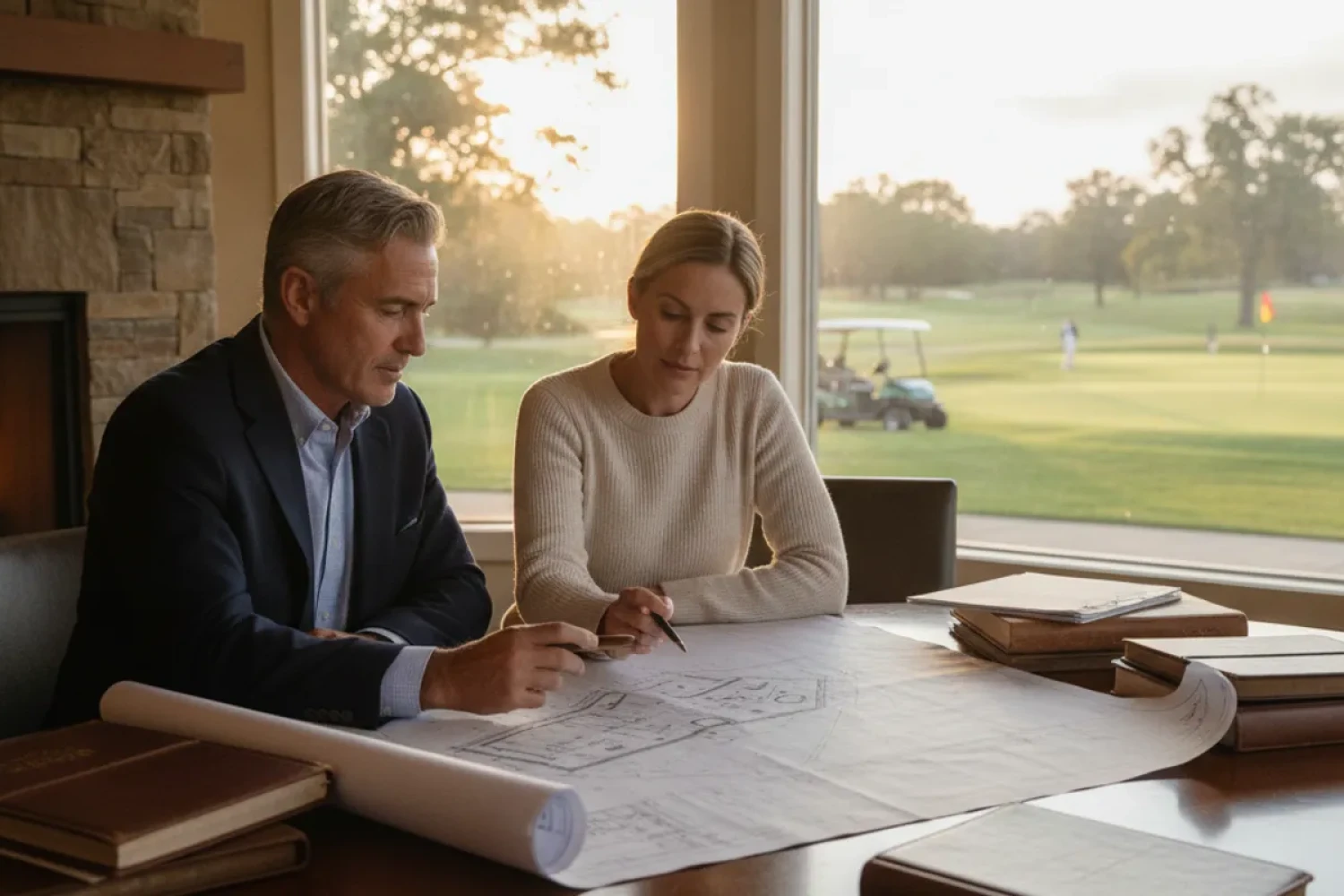
Golf course real estate brokers help owners and qualified buyers navigate a specialized property transaction. A golf course combines land, facilities, operations, and relationships, so the work involves more than presenting acreage or reviewing a listing. A golf-focused broker can organize information, manage communication, and help each party identify questions that need expert review.
Discuss your golf course plans
What do golf course real estate brokers do?
A course transaction may involve real estate, buildings, course infrastructure, equipment, operating activities, memberships, contracts, and other obligations. The combination differs from one property to another. A broker helps define the process, assemble a coherent picture of the opportunity, and keep questions moving between the parties.
For an owner, that can mean clarifying objectives, preparing information, identifying appropriate qualified buyers, and managing inquiries. For a buyer, the work may include refining acquisition criteria, locating relevant opportunities, understanding materials provided, and coordinating requests for more information. The broker helps structure the conversation; buyer and seller make their own decisions.
Brokerage is not a replacement for legal, accounting, engineering, environmental, or tax advice. A broker can help surface issues and coordinate the transaction, while each party uses independent specialists to evaluate matters in their fields. This distinction matters when an early summary is being used to frame a complex property.
How does a golf property transaction differ from other real estate deals?
The property may include playing areas, practice facilities, irrigation and drainage systems, a clubhouse, maintenance buildings, access arrangements, and other improvements. The operating picture may also involve tee-time activity, food service, events, employees, members, vendors, and contractual commitments. Which elements are material depends on the course and proposed transaction.
For example, a buyer interested in maintaining golf operations may focus on course condition, staffing, customer relationships, and continuity. A buyer evaluating another future use may need a different set of land-use, access, planning, and environmental questions. Neither approach should rely on assumptions about available approvals or uses; those matters call for local professional review.
Owners can make discussions more useful by separating verified records from estimates and explaining gaps. Buyers should similarly distinguish what a document states from what has been independently confirmed. A broker familiar with golf properties can help organize the review, but does not make technical findings for the parties.

What should an owner look for in a golf course broker?
Ask the broker to describe the role they would take, the work included, and how they would approach a property like yours. Relevant experience matters because golf operations and facilities create questions that may not arise in a general commercial property transaction. Ask for examples of the issues they help coordinate, without assuming every course follows the same process.
- Representation: Confirm whether the broker represents you as seller, represents a buyer, or is engaged for a defined advisory role. Understand how conflicts and communication will be handled.
- Preparation: Ask what information is useful at the outset and how missing or older records should be flagged.
- Buyer outreach: Discuss how appropriate qualified buyers will be identified and the tradeoffs between open broadcast marketing and a controlled process.
- Confidentiality: Ask what is shared at each stage, how interested parties are screened, and how document access is controlled.
- Coordination: Clarify how the broker works alongside attorneys, accountants, lenders, and technical advisors without replacing them.
- Engagement terms: Read the written agreement for scope, responsibilities, and compensation provisions, and ask questions before signing.
Useful answers are specific about process and candid about uncertainty. Be cautious of an unsupported promise about an outcome. A responsible discussion should explain what is known, what requires investigation, and which decisions remain yours.
For a closer look, read what a golf course broker does and how to choose a golf course broker.
How can sellers prepare before speaking with a broker?
Create a working inventory of available information. Depending on the course, this could include a site plan, building details, course and maintenance records, operating summaries, membership or customer information, material contracts, permits, and access or land-use information. The broker can help determine what is relevant and how it should be organized.
Mark records that are incomplete, dated, or based on estimates. Note pending disputes, deferred work, unusual commitments, or operational changes that could affect a buyer’s understanding. Do not try to resolve every question alone; make uncertainties visible so they can be routed to the right advisors.
Owners should define a successful outcome beyond a headline offer. Priorities may include continuity for employees or members, preserving the course’s character, future land use, confidentiality, or transaction structure. Rank those priorities and identify where flexibility may exist. This preparation can make proposal comparisons more meaningful.
For further preparation, see Fairway’s guide to preparing a golf course for sale and its golf course business plan guide.
How can confidentiality be managed while reaching qualified buyers?
Unplanned disclosure may concern employees, members, customers, vendors, or other stakeholders. Before outreach begins, an owner and broker can agree on how inquiries are handled, what information can be shared first, and what must happen before access to detailed records. The sequence should reflect the owner’s instructions and the property’s circumstances.
Buyer qualification is more than collecting a name. The seller may need to understand the buyer’s objectives, relevant experience, capacity to proceed, and fit with the opportunity. The buyer should be prepared to explain its interest and provide reasonable information to establish qualifications. The broker can coordinate these exchanges and keep records from being distributed casually.
Confidentiality is not an absolute guarantee and does not replace diligence. Ask how documents are stored and shared, what restrictions apply, and how access ends if a party does not proceed. Buyers should expect information to be staged and certain records to require additional permission or professional review.
Fairway describes its controlled process as Invitation Only Offerings, with pre-qualified participants and structured bid deadlines. Owners can also review its golf course sale confidentiality guide.

What should a qualified buyer examine?
Organize review around connected subjects. This table is a discussion checklist, not a universal list of requirements. Tailor it to the property, intended operating approach, and advice from independent professionals.
| Review area | Questions to ask | Useful next step |
|---|---|---|
| Land and facilities | What land, buildings, access, and improvements are included? | Confirm boundaries and records; arrange appropriate inspections. |
| Course condition | What is known about playing areas, irrigation, drainage, and maintenance systems? | Have qualified technical professionals assess relevant conditions. |
| Operations | How are golf, food service, events, and other activities organized? | Review available operating information and test assumptions. |
| People and agreements | What employee, member, vendor, or customer relationships may affect transition? | Ask counsel to review applicable agreements and obligations. |
| Land use and environment | Are there restrictions, permits, environmental concerns, or alternative-use questions? | Seek independent planning, legal, and environmental review as needed. |
| Deal terms | Which assets, liabilities, approvals, and conditions are included? | Discuss structure and documentation with buyer’s advisors. |
A practical way to proceed is to maintain a question log. For each item, record the source, answer received, and whether an independent professional still needs to verify it. If an answer changes, update the log rather than relying on an older email or summary. This discipline helps prevent an assumption from quietly becoming a deal fact.
Buyers may find Fairway’s resources on golf course buyer qualification and buyer representation useful when organizing their approach.
How should owners compare proposals?
Two proposals can look similar at first glance but allocate risk and responsibility differently. One may depend on approvals or other conditions; another may address operating assets, employee matters, or transition support differently. A broker can lay out those differences consistently so the owner and advisors can evaluate them.
Ask: What exactly is included? What conditions must be satisfied? Which approvals or documents are outstanding? How will employees, members, and operations be addressed? What responsibilities continue after closing? Which points need legal, tax, or financial review? Clear answers expose both strengths and open issues.
Negotiation is also prioritization. An owner may care most about certainty, confidentiality, continuity, or a particular structure. Not every preference can be achieved at once. A broker can relay questions, organize responses, and clarify where parties agree or differ, while the owner retains control. Attorneys prepare and review definitive documents and provide legal advice.
See Fairway’s overview of golf course sale structure and guide to evaluating a golf course sale offer.
How can a broker support a buyer’s search?
Before seeking opportunities, define an acquisition profile. Consider geography, course type, operating preferences, intended ownership role, and resources available to evaluate a property. Separate essential requirements from preferences. A buyer might require a particular operating model but remain flexible about facility features. This distinction helps a broker identify fit without over-filtering.
Some owners may consider a sale without broad advertising. A broker’s industry relationships may help surface opportunities where an owner is willing to engage, but no broker can promise that a particular property is available. Buyers should describe their objectives and qualifications while respecting confidentiality and the owner’s process.
Once an opportunity is under consideration, organize information requests by topic and explain why each item matters. A concise, prioritized list is easier to answer than repeated broad requests. Fairway’s golf course acquisition search guide provides additional preparation points.
What do relevant public records tell you about golf property?
An Arizona Department of Revenue document titled Golf Courses notes that golf-course fees may provide income or help defray expenses during development of an affiliated real estate project. That narrow statement illustrates why the relationship between a course and surrounding development may be relevant in some settings.
It should not be generalized into a claim about every golf course, its performance, or transaction economics. A buyer considering development context should investigate the actual site, governing records, applicable approvals, and obligations with qualified local advisors. A seller can distinguish established facts from speculation about future uses.
When using a public source, check its date, scope, and purpose. A tax or government document may address a specific policy or assessment issue rather than provide a complete transaction analysis. The broker can help identify the question; specialists should interpret records and advise on implications.
What should you clarify before taking the next step?
An owner can explain the property, operating context, and priorities, while a buyer can outline acquisition criteria and readiness. Bring available information, label what remains uncertain, and ask how the broker’s engagement would work. You do not need a complete data room or final decision to have a useful conversation.
Fairway Advisors focuses on golf course brokerage and advisory for sellers and qualified buyers. Review its golf industry brokerage overview for more about golf-specific work.
Explore brokerage and advisory services
Frequently Asked Questions
What is a golf course real estate broker?
A golf course real estate broker guides owners or qualified buyers through a transaction involving a golf property. Work may include preparation, buyer outreach or opportunity search, confidentiality, information exchange, and proposal discussions.
Should I work with a broker who specializes in golf courses?
Golf specialization can help because a course combines property, facilities, and operating considerations. Ask about relevant experience, representation, scope, confidentiality practices, and coordination with independent advisors.
Does a broker replace legal or financial advisors?
No. A broker supports the transaction within the agreed scope. Attorneys, accountants, engineers, environmental consultants, and other specialists provide independent advice in their fields.
How can a seller keep a possible sale confidential?
Agree on a staged disclosure plan with the broker. It may include screening inquiries, confidentiality documents, and controlled access to detailed records. No process can promise absolute confidentiality.
Can a broker help a buyer find an opportunity that is not broadly marketed?
A broker may be able to discuss opportunities through industry relationships when an owner is willing to engage. Buyers should define criteria and explain qualifications; availability is not guaranteed.
Call to discuss your golf course plans
Golf course transactions call for careful attention to both the property and its operating context. A golf-focused broker can help owners and qualified buyers organize the process, ask better questions, and decide what to address next.