

A golf course transaction advisor helps owners and qualified buyers navigate the decisions, preparation, marketing, and negotiations involved in a golf property transaction. The right advisor understands that a golf course is both real estate and an operating business, with relationships, facilities, land, and club considerations that need to be considered together.
Discuss your golf course transaction
Call Fairway Advisors at (214) 485-1500
What does a golf course transaction advisor do?
A golf course combines several layers of value and risk. The land and improvements matter, but so do course conditions, operating practices, membership structure, food and beverage operations, maintenance obligations, permits, and the expectations of employees and members. These parts affect one another. A buyer evaluating the real estate alone may miss important operating questions; an owner focused only on daily operations may overlook how a purchaser will assess the whole property.
A specialized advisor brings golf-industry context to the transaction. The advisor helps frame the opportunity clearly, identify information a qualified buyer will need, and prepare for questions that are specific to a golf facility. The advisor is not a substitute for legal, tax, environmental, engineering, or accounting professionals. Instead, a broker coordinates the commercial process and helps the owner work effectively with those specialists.
Fairway Advisors provides golf course brokerage and advisory services for buyers and sellers. Learn more about the firm’s golf course brokerage background and its brokerage and advisory services.
When should an owner involve an advisor?
Owners often begin considering a transaction for different reasons. Retirement, a change in family or partner circumstances, a desire to redirect capital, operational pressure, or a change in the club’s strategic direction may prompt a review. The reasons are personal and property-specific. A discussion with an advisor does not commit an owner to sell; it can provide a structured way to examine choices before making a public move.
Early planning is useful because transaction readiness involves more than collecting a financial statement. An advisor can help an owner map the people, records, property issues, and operating questions that may require attention. That planning may reveal gaps to address, facts to verify, or stakeholders who need a carefully managed role. It can also help the owner decide what information should remain confidential and how an inquiry should be handled.
For a practical overview of seller preparation, review Fairway Advisors’ guide on how to prepare a golf course for sale. Preparation is not a promise that every issue will be resolved before marketing. It is a way to understand the property’s current position, organize reliable information, and avoid preventable confusion when serious interest arises.
What work happens during a golf course transaction?
The stages are connected rather than a one-size-fits-all checklist. Decisions made at the beginning affect how the property is presented, what information is shared, and which potential buyers are appropriate to approach. An advisor should explain the purpose of each step and make clear where the owner, broker, and outside professionals have distinct responsibilities.
| Work area | What the owner contributes | What the advisor coordinates |
|---|---|---|
| Objectives and strategy | Clarifies priorities, constraints, stakeholders, and acceptable paths. | Frames a transaction plan that reflects the owner’s goals and the property’s circumstances. |
| Property and operating information | Provides accurate records and access to people familiar with the facility. | Organizes the information, identifies questions, and helps prepare a clear presentation. |
| Buyer outreach | Approves the approach and helps protect sensitive details. | Identifies suitable audiences and manages open broadcast marketing or an Invitation Only Offering, as appropriate. |
| Negotiation and diligence | Makes informed decisions and engages legal, tax, and technical professionals. | Communicates proposals, tracks open issues, and coordinates the commercial process among the parties. |
Preparation often includes gathering property and operating records, clarifying what is included in a potential transaction, and identifying issues that need professional review. Relevant materials may concern ownership, land and improvements, course operations, club or membership arrangements, permits, contracts, maintenance practices, and financial records. Which materials matter most depends on the property and transaction structure.
An advisor can also help the owner distinguish between a fact that is documented, an assumption that needs checking, and an issue requiring specialist advice. That distinction matters. A well-organized process is not about making every property look the same; it is about presenting the facts accurately and giving interested parties a consistent basis for evaluation.
How does a golf course advisor reach and assess buyers?
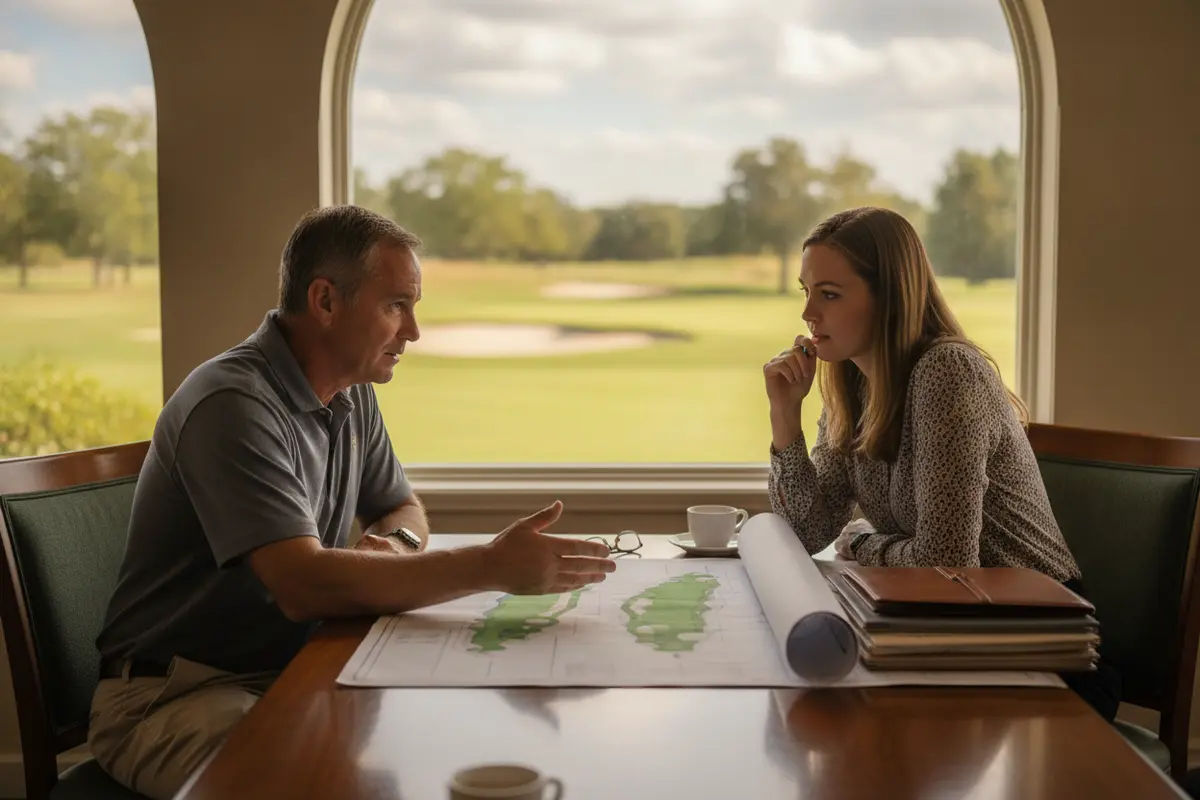
Golf properties can interest different kinds of buyers, including experienced operators, private clubs, developers, and institutional investors. Their operating plans and acquisition criteria may differ. A broker familiar with golf transactions can help the seller understand which audiences may be relevant and how the property’s features should be explained to each.
Initial outreach should protect sensitive information while allowing a serious party to understand the opportunity. The advisor can manage inquiries, determine what information is appropriate to share at each stage, and use confidentiality documents where warranted. As interest develops, the seller and advisor can consider the buyer’s experience, decision process, intended use, and ability to proceed. Those considerations are property- and party-specific; they should not be reduced to a single generic test.
Fairway Advisors describes its controlled sale method as an Invitation Only Offering. This approach involves pre-qualifying buyers who meet defined criteria and inviting them to submit offers by structured bid deadlines. For other situations, open broadcast marketing may be appropriate. The advisor should explain how the recommended approach supports the seller’s objectives and what trade-offs it creates.
What should a qualified buyer expect from an advisor?
A buyer should be prepared to explain the type of facility it seeks, its intended operating or ownership approach, and the considerations that would make an opportunity a fit. Clear criteria help an advisor focus attention on relevant properties and avoid treating every listing or introduction as interchangeable. Fairway Advisors’ acquisition parameters provide a starting point for understanding buyer requirements.
When a potential opportunity is identified, the advisor can help the buyer understand the information available, submit questions through an orderly channel, and keep discussions moving among the relevant parties. The buyer should distinguish preliminary information from verified facts and identify which questions require outside review. A golf course acquisition can involve land, buildings, equipment, operating arrangements, membership relationships, and future capital needs, so a thoughtful review considers how these pieces fit together.
Buyers should also ask how the advisor’s representation works in the particular engagement. The broker should be clear about whom they represent and how communications with the seller will be handled. That clarity helps each party understand the advisor’s role and make informed decisions throughout the process.
How should an advisor handle confidentiality and diligence?
Golf course information can be sensitive for practical reasons. Employees, members, vendors, guests, and neighboring property owners may react to rumors before an owner is ready to communicate. A premature disclosure can also disrupt operations or create uncertainty among stakeholders. The owner and advisor should agree on who may receive information, what may be shared, and how inquiries should be routed.
A signed confidentiality agreement can set expectations before detailed materials are provided. The parties should understand its terms and consult their own counsel as needed. Fairway Advisors provides information about its confidentiality agreement process; an agreement is one part of a broader information-control plan, not a guarantee that information cannot be disclosed.
During diligence, a buyer may ask questions about the property, operations, contracts, environmental matters, physical condition, governance, or financial records. The advisor can maintain an organized question-and-answer process, direct specialized questions to the right professionals, and help the seller track responses and unresolved items. Clear records of what was requested, supplied, and still under review reduce the chance that parties rely on conflicting versions of the facts.
The advisor’s role is to keep communication coherent, not to provide every technical opinion. Attorneys address legal questions; accountants and tax advisers address their disciplines; engineers and environmental consultants evaluate matters within their scope. A sound transaction process makes room for these independent professionals and ensures their work is coordinated with the commercial discussions.
How can owners choose the right transaction advisor?
Experience in general commercial real estate can be useful, but a golf course has operating and community considerations that may not arise in a conventional property transaction. Ask how the advisor assesses course operations, club structure, land and improvements, and the needs of different buyer groups. The answer should show an understanding of the full asset rather than focus on a single feature.
Owners should also ask how the broker will keep them informed. Who will be the primary contact? How are inquiries screened? How will sensitive information be handled? How are competing priorities or stakeholder concerns surfaced? What outside specialists may be needed, and how will their work fit into the process? Clear answers make it easier to judge whether the working relationship is a good fit.
Review Fairway Advisors’ guide on choosing a golf course broker for additional questions to consider. An advisor should welcome a thoughtful discussion of responsibilities and expectations. The engagement should make clear what the broker will do, what the owner must decide, and which matters belong to other professionals.
Fairway Advisors represents buyers and sellers in golf course transactions. That perspective can help the firm understand what each side needs to assess while maintaining clarity about whom it represents in a particular engagement. Owners should ask any advisor to explain representation, potential conflicts, and how those matters are addressed before proceeding.
Learn more about Fairway Advisors’ golf course brokerage services
Call Fairway Advisors at (214) 485-1500
Frequently Asked Questions
Is a transaction advisor the same as an appraiser?
No. A golf course broker advises on and represents a client through a transaction. An appraisal is a separate professional service with its own scope and standards. Owners who need an appraisal should engage an appropriately qualified appraisal professional; a broker can help coordinate the broader transaction but should not be described as an appraiser.
Does an owner need to be ready to sell before speaking with an advisor?
No. An owner can have an initial conversation to understand options, preparation needs, and confidentiality considerations without making a commitment to sell. The owner decides whether and when to pursue a transaction.
What records should an owner begin organizing?
Start with records that explain ownership, the property, operations, club or membership arrangements, contracts, permits, maintenance, and financial performance. The right scope depends on the facility. An advisor can help create a relevant list and identify records that need review by legal, accounting, engineering, or environmental professionals.
Can an advisor represent a buyer as well as a seller?
Golf course brokerage can include both buyer-side and seller-side representation. The parties should ask the broker to explain whom the broker represents in a specific engagement, how any potential conflicts are disclosed, and what duties apply.
Discuss your golf course transaction
Whether you are considering a sale or evaluating an acquisition, a golf-focused broker can help you understand the process and organize the right questions. Contact Fairway Advisors to discuss your situation and determine an appropriate next step.
Careful advice begins with understanding the property, the people involved, and the client’s objectives.