

Selling a golf course in Illinois requires more than placing a property on the market. Owners need a coordinated view of the land, golf operation, ownership objectives, buyer fit, and confidentiality requirements. A Chicago metro course may present different access and land-use questions than a facility in central or southern Illinois. Private clubs, daily-fee courses, resorts, and mixed-use properties also require different preparation. This guide explains the key decisions before marketing.
Call Fairway Advisors at (214) 485-1500 to discuss selling a golf course in Illinois confidentially.
For an owner considering selling a golf course in Illinois, the right starting point is a confidential, golf-specific review of the real estate and the operating business together. That review helps clarify preparation priorities, positioning options, and which qualified buyer conversations deserve attention.
This guide to how to sell a golf course provides broader process context. The sections below focus on Illinois decisions that can shape diligence, buyer fit, and the way the opportunity is presented.
What Does Selling a Golf Course in Illinois Involve?
Selling a golf course in Illinois involves preparing the property, operating information, ownership structure, and buyer strategy as one transaction. The sale approach should connect the facility’s physical condition and business profile with the owner’s objectives and the expectations of qualified buyers.
The reason for a sale affects the priorities from the beginning. An owner may be considering a transition, succession, portfolio change, or a different future for the property. A member-owned club may need a careful approach to continuity and communication. A daily-fee facility may require a close review of customer demand, access, maintenance, and the operating model. A resort or mixed-use asset may raise additional questions about lodging, amenities, entitlements, and surrounding land.
These motivations should be treated as planning questions, not assumptions. The desired level of confidentiality, the role of current management, the treatment of employees, and the intended buyer profile can all influence the disposition strategy. A golf-specific broker can help organize these considerations before sensitive information is shared.
Why an Illinois location requires more than a city label
Illinois is not one uniform golf market. A property near the Chicago metropolitan area may be assessed in relation to commuter access, established population centers, employment areas, competing recreation, and surrounding development. A course in central Illinois may depend more heavily on regional draw, local relationships, and the strength of nearby communities. A southern Illinois property may have a different customer base, access pattern, and land-use context.
Buyers may examine road access, visibility, acreage, easements, utilities, water resources, zoning, and restrictions affecting future use. They also need to understand how the facility functions day to day, including its customer base, staffing model, events, membership structure, practice amenities, clubhouse, and maintenance infrastructure.
How should an owner define a successful outcome?
A thoughtful sale process begins by defining what the owner wants the transaction to accomplish. That may mean preserving the character of a club, identifying an operator suited to the existing property, or evaluating strategic alternatives. The objective should guide the information shared, the buyers approached, and the terms that require particular attention.
Fairway Advisors represents both buyers and sellers in golf course transactions. That perspective supports a complete review of the transaction lifecycle, from preparation and positioning through diligence and negotiation. The goal is not to force every property into the same process. It is to present the course accurately and connect it with qualified buyers who understand its characteristics.
How Do Chicago Metro Buyer Dynamics Shape a Golf Course Sale?
Chicago metro buyer dynamics make access, surrounding land use, customer reach, and property identity especially important. An Illinois course should be positioned within the region it serves, not described only by its municipality or mailing address.
A Chicago-area golf property is evaluated in context. Buyers look beyond the course itself to understand how members, daily-fee players, employees, vendors, and surrounding communities reach and use the property. Convenient access from major roads and a recognizable trade area matter. Nearby employment or residential centers can support a different buyer conversation than a similar facility that is harder to reach.

Access and the surrounding land-use picture
Road access and traffic patterns can affect the experience of members, guests, vendors, and employees. Visibility may influence the facility’s identity, while nearby housing, employment, and recreation can shape customer demand. Buyers may also study municipal planning documents, zoning classifications, environmental matters, drainage, wetlands, and easements before forming a view of the property.
Land-use potential deserves careful language. Some owners want to maintain golf as the central use. Others may need to understand whether additional uses could be considered. A responsible marketing process separates verified rights from possibilities that require zoning review, approvals, studies, or community discussion. That distinction protects credibility and prevents a speculative concept from overshadowing the existing golf operation.
Which buyer groups may evaluate a Chicago-area property?
Qualified buyer groups can include experienced golf operators, private investment groups, family offices, developers, recreational operators, and owners seeking a complementary facility. Each group may focus on different elements. An operator may emphasize course condition and management continuity. An investment group may examine the operating model and surrounding real estate. A developer may focus on land-use facts while still needing a clear understanding of the property’s golf value.
The right buyer strategy is selective rather than indiscriminate. A golf-specific broker can organize confidential outreach, explain the opportunity accurately, and help determine which groups have the experience, resources, and intent to become qualified buyers.
What Should an Illinois Owner Prepare Before Marketing?
Before marketing, an Illinois owner should organize property, operating, membership, land-use, environmental, and ownership information. The purpose is to give qualified buyers a clear and consistent picture without exposing sensitive information unnecessarily.
Preparation is more than collecting a file of operating records. It is the process of identifying what a buyer will need to understand the facility and which questions could complicate diligence. Records should be organized around how a golf property operates. Unresolved issues should be identified early enough to address or explain them.
- Clarify ownership and decision authority. Confirm the legal ownership structure, decision makers, governing documents, and any member or board approvals that may affect a transaction.
- Describe the physical asset. Assemble surveys, acreage information, course plans, clubhouse details, practice facilities, maintenance areas, equipment information, easements, and utility records.
- Document operations. Summarize rounds, membership structure, events, staffing, food and beverage, instruction, maintenance practices, vendor relationships, and other operating features without overstating performance.
- Review land-use conditions. Identify zoning, entitlements, restrictions, environmental matters, water considerations, and known municipal or county planning issues.
- Organize business records. Prepare consistent operating records and supporting schedules that allow a qualified buyer to understand revenue sources, expenses, capital needs, and unusual items.
- Identify transition questions. Consider employees, memberships, contracts, vendors, equipment, traditions, and community relationships that may need careful handling.
- Set confidentiality rules. Decide what information can be shared, with whom, and at what stage. Sensitive outreach should be controlled and documented.
This preparation does not require an owner to resolve every issue before seeking advice. It creates a working map of the opportunity. It also helps distinguish facts that can be verified from assumptions that need further review.
Owners who want a preparation checklist can review how to prepare a golf course for sale. The appropriate preparation plan will depend on the property’s ownership, operations, physical condition, and intended buyer audience.
Request a confidential conversation about preparing your Illinois golf course for sale.
How Does the Process Differ for Private Clubs and Daily-Fee Courses?
Private clubs and daily-fee courses require different buyer analysis because their memberships, customer relationships, governance, operating expectations, and communication needs differ. The sale strategy should preserve the important facts of each model rather than use a generic property description.
| Consideration | Private club | Daily-fee course |
|---|---|---|
| Customer relationship | Membership experience, club traditions, dues structure, and member communication. | Public access, customer frequency, pricing structure, events, and local reputation. |
| Governance | Member, board, or ownership approvals and governing documents. | Owner or company decision authority and operating agreements. |
| Buyer focus | Continuity, membership health, amenities, and operating leadership. | Customer reach, course condition, operating efficiency, and market position. |
| Transition planning | Employees, members, traditions, contracts, and communications. | Employees, vendors, customers, programs, and day-to-day continuity. |
Private clubs require continuity planning
A private club’s identity is connected to more than its physical improvements. Its membership composition, governance, club culture, amenities, and deferred maintenance all matter. The relationship between members and management matters as well. Owners and boards should consider how information will be communicated and how a qualified buyer will understand the club’s identity without creating unnecessary disruption.
Membership-related obligations should be documented carefully. Buyers may need to understand agreements, deposits, benefits, resignations, unused rights, and liabilities connected to the member experience. The right review is fact-specific. It should not rely on a generic assumption about how every club operates.
Daily-fee courses require operating clarity
Daily-fee courses are often assessed through customer reach, local competition, course condition, maintenance practices, tee-time systems, events, instruction, food and beverage, and the strength of the operating team. A clear description of how the facility attracts and serves players can help qualified buyers evaluate the opportunity.
Both models benefit from honest positioning. A course should be presented in a way that explains its strengths, obligations, and opportunities without promising an outcome that has not been verified.
How Is an Illinois Golf Course Valued Without a One-Size-Fits-All Formula?
An Illinois golf course is valued through a property-specific review of the land, improvements, operations, customer base, membership profile, condition, location, and market evidence. No single formula can replace professional analysis of the complete asset.
Valuation begins by defining what is being evaluated. The land and improvements may be considered alongside the operating business, equipment, membership obligations, development restrictions, and other rights or liabilities. A course with strong facilities but significant capital needs presents a different question from a course with modest improvements and a strong regional operating identity.
Condition and course quality
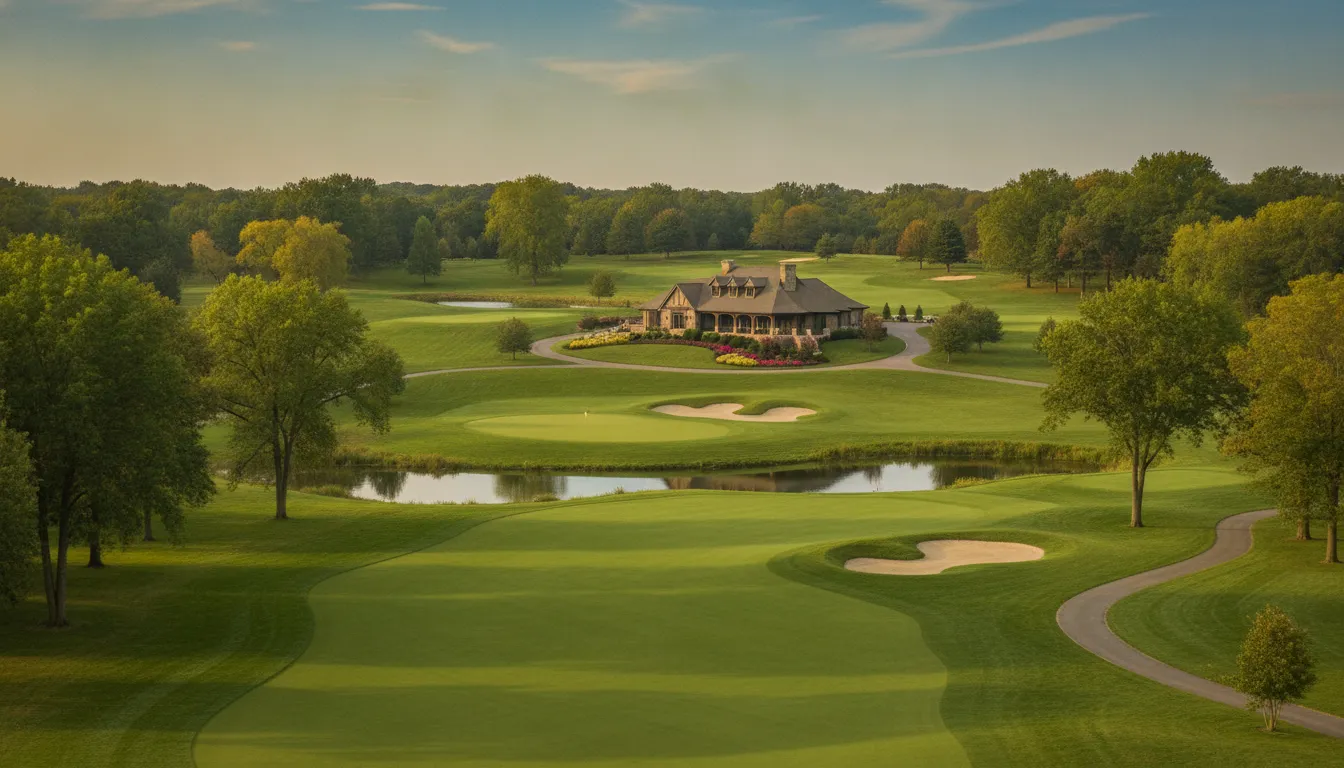
Course architecture, turf condition, drainage, irrigation, cart paths, maintenance buildings, equipment, practice areas, clubhouse condition, and accessibility can all affect how buyers interpret the asset. Maintenance needs should be described plainly. Avoiding difficult facts can weaken trust when diligence begins.
Operations, demographics, and marketability
Buyer analysis may include customer sources, membership trends, rounds, event activity, staffing, food and beverage, instruction, local demographics, traffic patterns, and nearby development. The purpose is not to reduce a complex facility to one metric. It is to understand how the property works and which qualified buyer groups may be able to operate it effectively.
Land use and future possibilities
Zoning, easements, environmental conditions, water, neighboring uses, and municipal planning can influence a buyer’s view. A future use should be treated as a question for appropriate legal, planning, engineering, or environmental review. It should not be presented as a guaranteed source of value.
For a deeper overview of the factors involved, see Fairway Advisors’ golf course valuation guide. A property-specific valuation discussion can then address the records and assumptions that need further review.
How Should an Owner Choose a Broker for an Illinois Golf Course Sale?
An owner should choose a broker with golf-specific transaction experience, a disciplined confidentiality process. Qualified buyer reach, and the ability to explain both the operating business and the real estate. The advisor should also make clear who will lead the engagement.
General commercial real estate experience can be useful, but golf course transactions involve operating, membership, land-use, maintenance, and buyer-fit questions that deserve specialized attention. The right advisor should be able to discuss the property as a complete golf asset and adapt the process to the owner’s objectives.
Questions worth asking
- What golf transaction experience does the team bring? Ask how the advisor’s background relates to golf operations, buyer representation, seller representation, and complex property issues.
- How will confidentiality be managed? Ask how information is controlled, how outreach is documented, and how the advisor protects the owner, employees, members, and customers from unnecessary disruption.
- How are qualified buyers identified? Ask how buyer groups are evaluated for experience, intent, capacity, and fit with the property’s objectives.
- How will the property be positioned? The marketing story should be accurate, specific, and supported by organized information. It should not rely on exaggerated future-use claims.
- Who will be involved day to day? Confirm who leads the engagement, who handles buyer communication, and how the owner will receive updates.
Fairway Advisors’ model is built around golf course brokerage and advisory work. The firm represents both buyers and sellers, which provides perspective on the questions that arise on both sides of a transaction. Its work spans golf course sales and advisory assignments across multiple markets, with direct principal involvement.
Owners evaluating a controlled, confidential outreach strategy can also review Fairway’s Invitation Only Offerings. The right approach depends on the owner’s goals, the property profile, and the qualified buyers who may fit the opportunity.
Call Fairway Advisors at (214) 485-1500 to discuss broker selection and your Illinois golf course.
What Are the Next Steps for an Illinois Golf Course Owner?
The next step is a confidential review of the owner’s objectives, the property, the operating business, and the information available for diligence. That conversation can identify preparation priorities without committing the owner to an unsuitable sale strategy.
Owners do not need to publish a listing before asking informed questions. A private discussion can help clarify whether the immediate need is preparation, valuation analysis, buyer strategy, operational review, or a broader disposition plan. It can also identify issues that should be addressed before sensitive information is shared.
For an Illinois property, the discussion should include location, access, customer reach, and course type. It should also cover the membership or daily-fee model, land-use conditions, physical needs, ownership structure, and required confidentiality. These details help an advisor determine how to present the opportunity and which qualified buyers may be appropriate.
Owners who are ready to consider a listing can review Fairway’s golf course listing and sale preparation guidance before a private conversation. The purpose is to make the next decision informed and property-specific.
Request a confidential conversation with Fairway Advisors about your Illinois golf course.
Frequently Asked Questions
Are there golf courses for sale in Illinois?
Golf course availability changes as owners consider transitions, portfolio decisions, and new operating strategies. Some opportunities are marketed openly, while others are discussed confidentially with qualified buyers. Owners and buyers should verify current availability and property details directly with a golf course broker.
What documents are needed to sell a golf course?
Useful records can include ownership documents, surveys, property information, operating records, membership materials, contracts, equipment details, maintenance information, zoning documents, environmental records, and other diligence materials. The exact list depends on the facility and transaction structure.
How is an Illinois golf course valued?
Valuation considers the land, improvements, operating business, course condition, membership or customer profile, location, marketability, land-use conditions, and comparable market evidence. A golf-specific advisor can help organize the information and explain which assumptions require additional review.
Should I sell my golf course privately or through a broker?
The right approach depends on the owner’s objectives, confidentiality needs, property profile, and access to qualified buyers. A broker can help evaluate the alternatives, organize preparation, and manage buyer communication. A confidential consultation can clarify which approach fits the asset.
Call Fairway Advisors at (214) 485-1500 to discuss selling a golf course in Illinois.
Discuss Your Illinois Golf Course Sale
Selling a golf course involves more than evaluating the property alone. A confidential conversation with a golf-focused advisor can help clarify your goals, organize the facts, and identify the right next step for your facility. Fairway Advisors represents golf course owners and qualified buyers throughout the transaction lifecycle.