
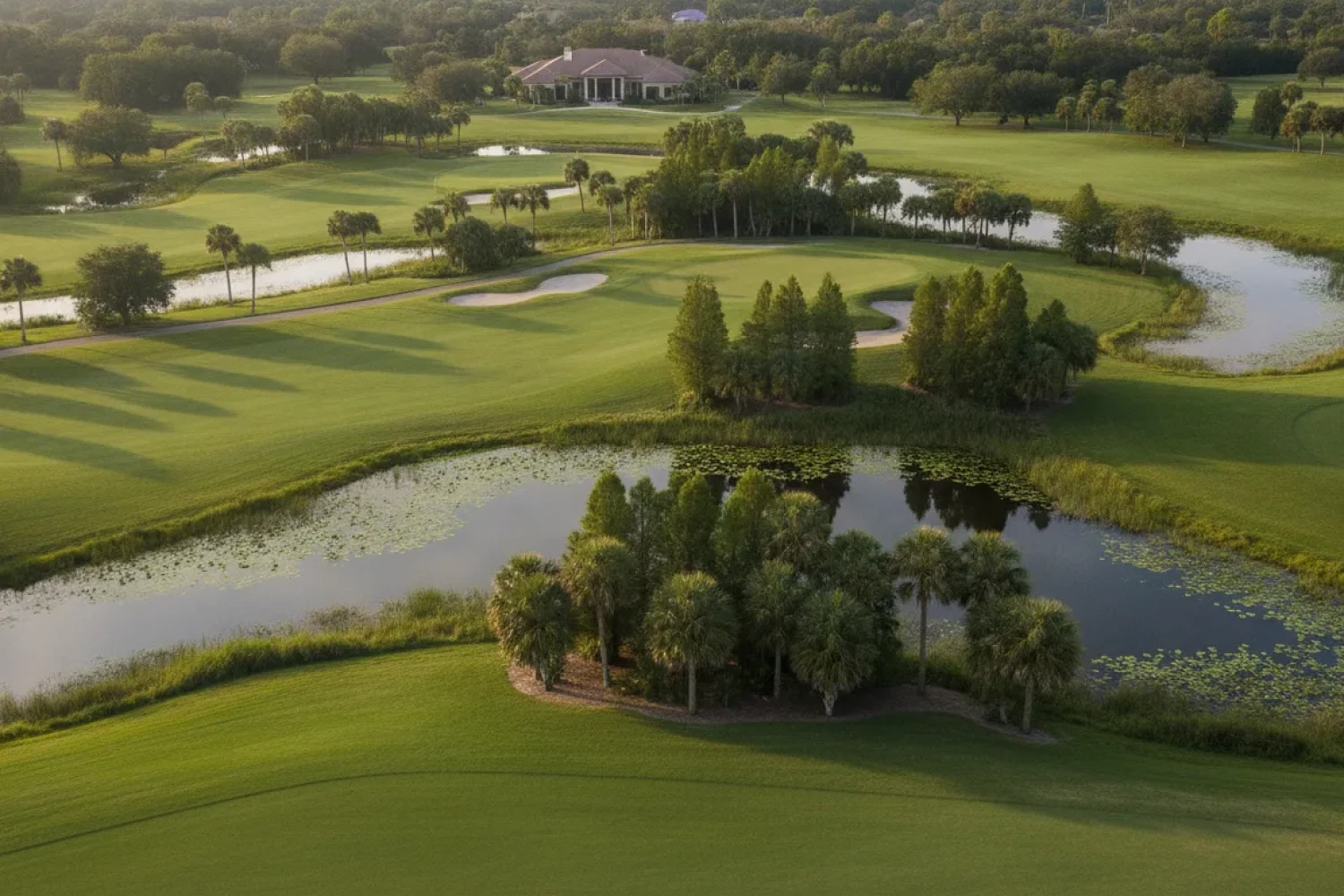
Florida golf course owners are evaluating more than property demand when they consider a sale. Community setting, operating model, seasonal patterns, land use, and buyer fit can shape how an asset is understood in the market. Lifestyle buyers remain active but are comparing communities, amenities, and overall value carefully, according to Florida Realtors.
Selling a golf course in florida requires a coordinated review of the course, business operations, surrounding community, market conditions, and likely qualified buyers. A specialized golf course advisor can help an owner position the property accurately, protect confidentiality, and manage the transaction from valuation through closing.
Florida’s regional and seasonal dynamics make local context essential. The right approach starts by clarifying what is being sold, how the property serves its market, and which buyer profiles are the best fit. Those considerations establish the practical foundation for preparing the property and its supporting information.
Call Fairway Advisors at (214) 485-1500
What Does Selling a Golf Course in Florida Require?
Golf courses combine real estate, operations, land-use considerations, and community relationships. That combination makes the first review especially important. A seller and advisor should examine the course, clubhouse, maintenance operation, amenities, memberships, surrounding development, and any obligations that may affect a buyer’s understanding of the asset. Florida’s seasonal market adds another regional consideration, so the property should be presented with an accurate view of how its operations and demand function throughout the year. Learn more about how to sell a golf course before deciding how to position the property.
Begin with a complete asset review
The review should establish what is being offered and how the parts work together. That may include operating records, property details, course improvements, water and maintenance systems, agreements, permits, membership information, and the relationship between the course and any adjacent community. The goal is not to reduce the property to a single metric. It is to create a clear, supportable picture that helps the right buyer evaluate the opportunity.
Protect confidentiality while reaching qualified buyers
Confidentiality matters when owners do not want employees, members, vendors, or the local market to learn about a potential sale prematurely. A controlled process can limit disclosure, qualify buyer interest, and release information in an orderly manner. Marketing should focus on a qualified pool of buyers whose experience, intended use, and resources fit the property. That approach is more useful than broad exposure that generates attention without serious engagement.
Coordinate diligence and closing support
Once a qualified buyer is engaged, the process moves into documentation and diligence. The parties may need to organize operating information, property records, contracts, environmental materials, and other transaction documents. An experienced golf course advisor helps keep requests organized, identifies gaps early, and coordinates communication among the owner, buyer, attorneys, lenders, and other professionals. Fairway Advisors describes its role as managing the transaction lifecycle from initial valuation through closing, with integrity and professional rigor. For owners seeking a specialized golf course advisor, that full-process support can make a complex Florida sale more orderly and easier to evaluate.
Florida’s Golf Course Market: Seller Outlook and Recent Trends
Florida’s golf course market benefits from the state’s enduring appeal as a lifestyle destination. Golf-course communities remain a desired setting for relocation-minded buyers in warm-weather states, while master-planned communities continue to combine housing, amenities, and recreational offerings. These patterns create a meaningful backdrop for owners considering a sale, particularly when a course functions as more than a standalone sporting asset.
That broader role matters. A course may support the identity of a residential community, provide a daily amenity for active-adult residents, or contribute to a resort-style experience. Walking trails, pools, fitness facilities, and other amenities can shape how buyers understand the surrounding lifestyle. Florida Realtors reporting identifies golf-course communities as one of the preferred location types for lifestyle buyers. The report also notes that buyers are comparing communities, amenities, and overall value more deliberately. Read the Florida Realtors report on lifestyle buyer behavior.
For sellers, active demand should not be mistaken for automatic buyer readiness. Affordability pressures, insurance costs, construction conditions, and broader financing considerations can influence how a buyer evaluates a golf property and its surrounding community. A careful buyer may look beyond the fairways to understand membership characteristics, maintenance requirements, access, nearby housing, land-use considerations, and the relationship between the course and local demand.
Why local and regional context matters
Florida is not one uniform golf market. Conditions can differ by region, community type, population base, competitive set, and relationship to surrounding residential or resort development. Seasonality also affects how a property is experienced and evaluated, making regional knowledge important when preparing the marketing position and presenting operating information.
A strong seller strategy therefore connects the property’s physical and operational qualities to the audience most likely to value them. That may require explaining the course’s role within a community, identifying the lifestyle attributes that distinguish the property, and anticipating the questions a cautious buyer will ask. Specialized golf-course market knowledge helps owners make those distinctions clearly without relying on broad statewide assumptions.
Who Is Buying Golf Courses in Florida?
Golf course buyers in Florida typically include owner-operators, private-club or resort groups, developers, and institutional investors. The strongest buyer is not simply the one who expresses interest. It is the qualified buyer whose operating vision, experience, diligence readiness, and intended use align with the property.
Florida golf properties can serve several markets at once. A course may function as a daily-fee operation, a private club, a resort amenity, or a central feature of a larger residential community. That range attracts different buyer profiles, each evaluating the asset through a different lens.
Owner-operators
Owner-operators usually want to be directly involved in the day-to-day business. They may focus on course conditions, membership or player experience, staffing, food and beverage, and the surrounding customer base. Their fit depends on relevant operating experience, a credible plan for continuity. And the ability to review the property as both a business and a specialized piece of real estate.
Private-club and resort groups
Private-club and resort groups may view a Florida golf course as part of a broader hospitality or membership strategy. They are often interested in how the course complements existing amenities, attracts the intended membership or guest profile, and supports a consistent service standard. Golf is increasingly evaluated within lifestyle and resort-style community frameworks, where amenities such as walking trails, pools, and fitness facilities help shape the overall experience. Florida lifestyle-market research identifies golf-course communities as a desired location type for relocation-minded buyers.
Developers and institutional buyers
Developers may examine the relationship between the course, surrounding land, existing entitlements, infrastructure, and a potential master-planned or active-adult community. Their questions often center on land-use compatibility and how the golf asset fits within a larger development vision. Institutional buyers may bring a more structured review process, with attention to governance, reporting, operational systems, environmental matters, and long-term asset management.
For an owner selling a golf course in Florida, screening should go beyond a buyer’s stated interest. A specialized advisor can assess the buyer’s experience, intended use, decision-making authority, diligence readiness, and ability to engage responsibly with the transaction. That process protects confidentiality while keeping discussions focused on qualified buyers whose plans match the property’s operating and community context.
How Should You Approach Pricing a Florida Golf Course?
A golf course is more than acreage and a clubhouse. Its value is shaped by how the property functions today, how well its improvements support that operation, and how the surrounding market may influence demand. That is especially important when selling a golf course in Florida, where regional conditions, community design, and lifestyle demand can vary substantially from one submarket to another.
Start by organizing the information a qualified buyer will need to understand the property. Review the course operation, facilities, maintenance condition, membership or customer profile, surrounding development, zoning, and any restrictions affecting future use. A specialized advisor can then help connect those facts to the most appropriate buyer audience and marketing position. For broader context, review these golf course valuation factors.
| Factor | Seller Questions |
|---|---|
| Operations | How does the course perform as an operating business? What do the records show about rounds, memberships, events, staffing, maintenance, and customer demand? |
| Physical assets | What is the condition and usefulness of the course, irrigation, maintenance equipment, clubhouse, cart facilities, practice areas, and other improvements? |
| Market | How does the property fit its Florida submarket, nearby communities, competing amenities, access patterns, and likely qualified-buyer profiles? |
| Alternative use | What land-use rules, entitlements, conservation requirements, easements, or community obligations affect any potential use beyond continued golf operations? |
These categories should be considered together. Income capitalization is one recognized conceptual approach for examining income generated by an operating property, as reflected in valuation regulations such as the Indiana guidance on income capitalization. Land-use treatment also matters because golf property can carry open-space characteristics, while the condition and remaining usefulness of improvements can raise obsolescence questions. These concepts are useful lenses, not standalone answers.
Before setting an asking position, separate verified property facts from assumptions about future performance. Document deferred maintenance, operational strengths, restrictions, and the reason a particular buyer might value the asset. Clear preparation supports credible marketing and gives qualified buyers a stronger basis for evaluating the opportunity.
How Does Seasonality Affect Golf Course Sales in Florida?
Florida does not operate as a single golf market. Weather, regional visitation, resident activity, membership patterns, and the role of the course within its surrounding community can differ by location.

Those factors influence how buyers assess the property and how confidently they can evaluate its operations. Fairway Advisors identifies Florida seasonality as a regional dynamic that requires specialized market knowledge, rather than treating it as a minor scheduling detail. Selling a golf course requires the operating story to be presented in the context of the local market.
Keep operating records ready for seasonal review
Seasonal fluctuations can make an incomplete record set difficult to interpret. Assemble consistent operating reports, membership information, rounds data, maintenance records, vendor agreements, and notes on unusual weather or course events. The goal is not to make the property look artificially uniform. It is to help a buyer distinguish recurring operating patterns from one-time disruptions.
Records should also explain changes in course usage. A shift in member play, public rounds, event activity, or staffing may reflect a regional pattern rather than a permanent change in demand. Clear notes and supporting documents give buyers a more reliable basis for diligence and reduce avoidable questions during review.
Present course condition and member communication together
Course condition is best understood alongside the decisions that produced it. Maintenance schedules, irrigation work, agronomic practices, capital projects, and known deferred items should be organized before marketing begins. A well-prepared condition summary allows buyers to evaluate the physical asset without relying on a brief visit or isolated visual impression.
Member communication matters as well. Owners should plan how and when to communicate a potential sale, while protecting confidentiality and avoiding speculation. A clear message can preserve trust and explain what members should expect during the review process. The appropriate approach depends on the club structure, membership agreements, and transaction strategy.
Make marketing materials ready before buyer outreach
Marketing should reflect the course as it operates in its regional setting. Prepare accurate photography, maps, operating summaries, property information, and answers to common diligence questions before outreach begins. This helps an advisor communicate the opportunity consistently when buyer attention increases and supports a controlled process for sharing confidential information.
Florida buyer decisions can also be shaped by broader conditions affecting lifestyle communities, including financing costs and insurance considerations. That makes precise, well-supported property information especially important. Seasonal readiness is ultimately an execution advantage: it gives qualified buyers a clear view of the course, its community role, and the work required to operate it responsibly.
What Should You Look for in a Specialized Florida Golf Course Advisor?
Choose an advisor with golf-specific transaction experience, Florida market knowledge, a confidential marketing process, access to qualified buyers, and the ability to coordinate diligence through closing.
Golf courses are specialized assets, not interchangeable commercial properties. An effective advisor should understand how the course, clubhouse, maintenance operation, surrounding land, memberships, and local market fit together. That perspective matters when selecting a specialized golf course advisor and preparing a property for serious buyer review.
Look for golf-specific experience
Ask how the advisor has handled golf course transactions and whether the team can speak fluently about course operations, facility condition, land use, buyer objectives, and community relationships. Golf-specific experience helps an owner identify the information buyers will need and present the property in a way that reflects its complete operating and real estate context.
Florida adds another layer of complexity. Regional conditions, local competition, surrounding development, and seasonality can affect both buyer interest and operating performance. The advisor should be able to explain how those factors apply to your specific course rather than relying on a generic real estate marketing plan. Specialized market knowledge is especially important in Florida’s seasonal market, according to Fairway Advisors.
Prioritize confidentiality and qualified-buyer outreach
A sale process should protect sensitive operating information and the owner’s control over who receives details. Ask what is disclosed at each stage, how inquiries are screened, and how the advisor distinguishes a qualified buyer from a casual prospect. A focused outreach strategy can align the property with buyers whose experience, objectives, and intended use are appropriate.
Fairway Advisors describes a methodology for marketing golf properties to an exclusive, qualified pool of buyers. That approach supports disciplined positioning without treating every inquiry as equally suitable. It also allows the advisor to present the course’s strengths clearly while keeping confidential information within an appropriate process.
Confirm full transaction support
Strong advisory support should continue after marketing begins. The advisor should help organize diligence materials, coordinate communication among owners, buyers, attorneys, lenders, and other professionals, and keep documentation moving through the transaction. Ask who will manage these details and how issues will be surfaced when they arise.
Fairway Advisors states that it manages the transaction lifecycle from initial valuation through closing, with an emphasis on integrity and professional rigor. For an owner selling a golf course in Florida. That end-to-end support can provide a clearer process and a single point of coordination while the parties work toward closing.
Call Fairway Advisors at (214) 485-1500
Frequently Asked Questions
What is the process for selling a golf course in Florida?
The process typically begins with a confidential review of the property, operations, records, land use, and seller objectives. A specialized advisor then helps position the course, identify qualified buyers, manage inquiries, coordinate diligence, and support negotiations through closing.
How do I determine the value of a golf course for sale?
Golf course value depends on more than the land and buildings. Relevant considerations include operating performance, course condition, facilities, land-use characteristics, market demand, future use, and the quality of available records. An advisor can organize these factors into a clear pricing and positioning strategy.
How does seasonality affect golf course sales in Florida?
Seasonal changes can affect course conditions, operating patterns, customer activity, and buyer attention. Sellers should prepare complete operating records and present the property consistently across seasonal conditions so buyers can evaluate both the current operation and its broader potential.
What are the common buyer types for Florida golf courses?
Potential buyers may include owner-operators, private-club or resort groups, developers, and institutional investors. The strongest fit depends on the course’s operations, land characteristics, community setting, and the buyer’s intended use. A qualified-buyer process helps focus outreach on credible matches.
What should I look for in a specialized golf course advisor?
Look for experience with golf-specific operations, confidential marketing, qualified-buyer outreach, diligence coordination, and transaction management. The advisor should understand both the seller’s objectives and the specialized considerations buyers evaluate when reviewing a golf course.
Talk With Fairway Advisors About Selling in Florida
Selling a golf course in Florida involves decisions about positioning, confidentiality, and finding a qualified buyer who understands the asset. Fairway Advisors can help you think through the next step with a golf course-focused perspective and a clear process.
Call Fairway Advisors for a confidential conversation about selling a golf course in Florida.