
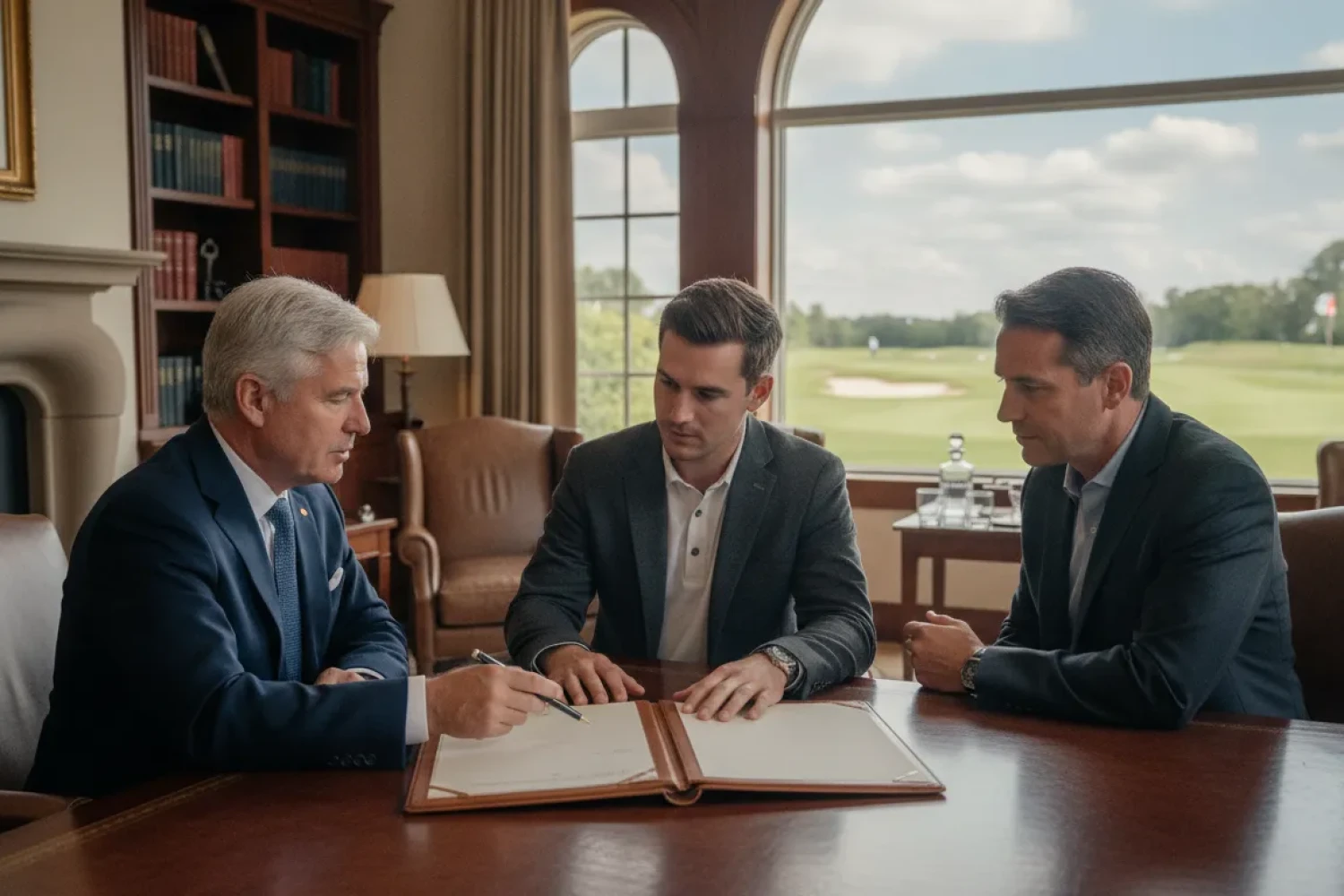
Selling a golf course is not the same as marketing a conventional commercial property. The course, operating business, land, membership structure, infrastructure, and buyer pool all require specialized judgment, careful preparation, and discretion from the outset.
To understand how to engage a golf course broker, start with a confidential consultation focused on your exit objectives. The property’s operations, its market position, and the information qualified buyers will need. A specialized broker can then shape a bespoke strategy, prepare the course for review, and manage outreach while protecting confidentiality.
That process should clarify what happens before a property is marketed, how the engagement is structured, and how buyer conversations are managed. Fairway’s complete guide to selling a golf course provides the broader roadmap. First, it helps to understand the broker’s role beyond simply introducing a buyer.
Call (214) 485-1500 for a confidential consultation about how to engage a golf course broker.
What Does a Golf Course Broker Actually Do?
A golf course is both an operating business and a specialized property. Its value and appeal can depend on course condition, membership dynamics, maintenance obligations, operating performance, land-use considerations, and the experience required to run it well. A broker brings those factors into one coherent sale strategy rather than treating the asset like a generic commercial property.
That intermediary role matters because a seller’s view of the course may not match how qualified buyers assess the opportunity. The broker helps translate the property’s strengths, risks, and operating realities into a market position that buyers can evaluate. Research from Michigan State University describes this role as aligning seller expectations with current market appetite and facilitating informed negotiations (Michigan State University research).
The broker’s responsibilities commonly include:
- Building a confidential exit strategy. The broker helps define the owner’s objectives, determine who should know about a potential sale, and choose an appropriate outreach approach. Confidentiality is essential because premature disclosure can affect staff confidence, member relationships, and day-to-day operations. Non-disclosure protections should be in place before detailed information is shared with a buyer (Illinois SBDC guidance).
- Positioning the course for the market. This includes evaluating the course’s attributes, operating story, condition, and ownership objectives, then presenting them in a way that reflects what the market is seeking. The goal is informed positioning, not an unsupported asking figure.
- Organizing financial and operational documentation. A broker identifies the records buyers will need, helps present them clearly, and coordinates preparation for rigorous review. Complete, consistent information gives qualified buyers a sound basis for evaluating the opportunity.
- Sourcing and qualifying buyers. A specialized broker uses industry relationships to reach a broader network of qualified buyers, including parties with relevant capital and operating experience. A public golf system analysis notes the importance of matching a course with buyers who understand how to operate this type of asset (Fairfax County golf system analysis).
- Managing negotiations. The broker serves as a buffer between the parties, keeping discussions focused on objective terms and reducing the pressure of direct, emotionally charged exchanges. The Illinois SBDC likewise identifies professional intermediaries as a way to maintain distance while terms are evaluated (Illinois SBDC guidance).
- Coordinating due diligence. The broker keeps requests, responses, advisors, and deadlines organized so that legal, financial, operational, and property questions move through the process efficiently.
For owners mapping out the broader process, How to Sell a Golf Course: A Complete Guide for Owners provides the strategic context. The broker’s job is to turn that strategy into a controlled, well-supported engagement tailored to the course and its ownership goals.
Initial Consultation: What to Expect from Your First Meeting
Owners often begin by asking how to engage a golf course broker without knowing exactly what the first conversation should cover. A productive consultation gives both sides enough context to determine whether the relationship is appropriate and what preparation should come next. Fairway Advisors approaches that conversation with discretion, direct principal involvement, and attention to the operational realities of a golf property.
- Share your ownership objectives and exit goals.
The meeting begins with your reasons for exploring an advisory relationship. You may be considering a change in ownership, succession, partnership priorities, or a broader strategic decision. The important point is to define the desired outcome before discussing execution. The U.S. Small Business Administration identifies establishing a clear exit objective as an important first step because it helps an advisor align preparation with the intended buyer profile and direction of the transaction. Learn more about defining an exit objective.
- Complete a confidential property assessment and preliminary valuation discussion.
You will discuss the course’s location, design, condition, operating model, membership structure, facilities, and competitive position. Fairway uses this information to form a preliminary view of how the property may be positioned for the market, without committing to a fixed outcome at this stage. The assessment is intended to identify relevant strengths, issues requiring preparation, and the type of qualified buyer most likely to understand the asset.
- Review the financial and operational documentation needed for due diligence.
The advisor will explain which records are needed to understand the property accurately. These may include financial statements, operating reports, membership information, maintenance records, capital-improvement details, real estate documents, and other material agreements. A thorough review of financial and operational performance supports credible preparation for buyer due diligence, while transparent disclosure helps build confidence and reduces the risk of avoidable surprises. Review the role of financial and operational documentation.
- Discuss market positioning and the qualified buyer profile.
A golf course is more than a parcel of land. Its operating history, course attributes, facilities, membership or customer base, and surrounding market all influence how it should be presented. You will discuss which characteristics deserve emphasis, what concerns a qualified buyer may examine. And whether the property’s story is best communicated through controlled outreach or broader market exposure. Confidentiality remains central as the positioning strategy takes shape.
- Outline a bespoke engagement structure and next actions.
The final portion of the meeting turns the discussion into a practical plan. Fairway Advisors uses custom engagement structures rather than standardized fee schedules, so the scope should reflect the property’s needs and your objectives. The next actions may include gathering records, refining the positioning strategy, coordinating with legal or financial advisors, and preparing the materials required for an informed engagement decision. You should leave with a clear understanding of responsibilities, communication expectations, and the questions still requiring attention.
The strongest initial consultations are candid on both sides. You do not need every answer in advance, but you should be prepared to discuss the property’s history, current operations, ownership considerations, and desired direction. That foundation allows the advisory relationship to be built around the course itself rather than a generic process.
How Are Golf Course Broker Engagements Structured?
The agreement is more than a formality. Brokerage relationships involve duties and obligations that should be established in writing, including the nature of the representation and the services the broker will provide. Georgia brokerage regulations likewise emphasize written agreements that clarify the relationship between broker and client.
For a specialized asset such as a golf course, the practical difference is whether the engagement is built around the property or forced into a generic process. The following comparison shows how those approaches differ.
| Bespoke specialist engagement | Generic one-size-fits-all arrangement |
|---|---|
| Custom-priced and structured around the course, ownership objectives, operating considerations, and desired level of market exposure. | Uses a standardized process or fee schedule that may not account for the course’s unique physical, operational, or ownership considerations. |
| Develops confidential marketing materials, including an offering memorandum, for qualified and pre-vetted buyers. The Illinois SBDC guidance describes an offering memorandum as a central document for sharing critical information with pre-vetted buyers. | May rely on broad distribution before the right audience, creating less control over who receives sensitive property information. |
| Can use Fairway’s controlled Invitation Only Offerings process, with structured bid deadlines, or open broadcast marketing when broad exposure is the appropriate objective. | Often defaults to one marketing channel without tailoring the release strategy to confidentiality, buyer quality, or seller preference. |
| Reflects Fairway’s dual representation model: the firm represents both buyers and sellers, giving it perspective on acquisition priorities as well as owner objectives. | May treat the engagement as a conventional listing without the same golf-specific buyer and seller perspective. |
What should the written agreement address?
Before signing, the owner should understand the engagement’s scope, communication process, confidentiality safeguards, marketing plan, and decision points. Detailed property information should be protected before it is shared with potential buyers. The Illinois SBDC’s sale guidance notes that confidentiality measures, including non-disclosure agreements, help protect day-to-day operations and staff confidence.
That structure is the foundation for deciding how the golf course brokerage process should proceed. A serious engagement should give the owner a clear strategy without promising a predetermined outcome, while preserving the discretion to match the property’s circumstances with the right buyer audience.
How to Engage a Golf Course Broker With the Right Questions
Before signing an engagement agreement, use the conversation to test the firm’s depth, not simply its sales presentation. These questions can help you compare approaches and decide whether the relationship is a sound fit.
Do you specialize in golf course transactions?
Golf courses combine operating businesses, specialized real estate, membership considerations, and physical assets. Ask how much of the firm’s work is devoted to golf and whether its team understands course operations, market positioning, and the expectations of golf-course buyers.
How current is your knowledge of the golf course market?
Market knowledge should go beyond a general statement that the firm serves real estate clients. Ask how the broker evaluates current buyer demand, regional conditions, course characteristics, and operational trends when shaping an engagement. The answer should explain how market intelligence will influence positioning and outreach.
How do you source and vet each qualified buyer?
Ask where the firm’s buyer relationships come from and what it verifies before sharing sensitive information. Vetting should consider a buyer’s relevant operating experience and ability to sustain the property, not just initial interest. Public golf asset sales, for example, have involved reviewing the incoming owner’s operational experience, as documented by Falcon Heights.
What confidentiality practices protect the course and its stakeholders?
Ask when a confidentiality agreement is required, who receives marketing materials, and how financial and operational information is controlled. A careful process protects staff confidence and day-to-day operations by limiting detailed disclosures to appropriately vetted parties. Confidentiality is a core safeguard in a sensitive sale process, as the Illinois SBDC guidance explains.
Will the engagement be bespoke or one-size-fits-all?
Ask whether the strategy, scope, and commercial terms are tailored to the course, ownership situation, and desired level of exposure. Fairway Advisors uses custom-priced, bespoke engagements rather than standardized fee schedules, allowing the work to reflect the property’s specific needs.
Will a principal lead the process?
Clarify who will advise you, lead buyer conversations, and handle key decisions after signing. A boutique, white-glove relationship should provide direct principal involvement rather than transferring the assignment to a junior broker after the agreement is executed.
What is the firm’s track record?
Request specific, relevant experience, including the kinds of courses and ownership situations the firm has handled. Fairway Advisors has a track record of over $1 billion in transactions and advisory assignments, a useful point of context when assessing specialized experience.
What is the marketing outreach plan?
Ask for a clear explanation of the audiences, channels, sequencing, and qualification standards the broker will use. Targeted outreach should identify primary and secondary buyer groups instead of relying on vague promises of exposure, consistent with documented guidance on outreach planning. You should understand what will be shared, with whom, and why before you sign.
Why a Bespoke, Specialized Engagement Matters
A golf course is not simply another commercial property or operating business. Its value and marketability can be shaped by the course’s design, membership structure, reputation, operating model, surrounding market, and relationship with its community. Those details influence how an opportunity should be evaluated, positioned, and introduced to a qualified buyer.
That is why a bespoke engagement matters. Rather than placing every assignment into a standardized process, Fairway Advisors develops a plan around the asset and the owner’s objectives. The work is principal-led, with direct involvement from the firm’s leadership instead of routine delegation to junior staff. Owners receive a focused point of contact who understands the sensitivity of the assignment and can help coordinate the brokerage or advisory work with discretion.
This approach is particularly important when a property is a championship venue or has a distinctive history, membership culture, or operating profile. Fairway’s experience includes the sale of three PGA Championship venues, while its national reach supports access to conversations beyond the property’s immediate market. The combination of specialized knowledge and broad perspective helps ensure that the course is presented on its own merits, not reduced to a generic property description.
Why generalist firms often refer golf course assignments
Traditional business brokers and investment bankers typically focus on non-golf businesses and financial transactions outside the specialized golf market. When a golf course opportunity comes across their desk, referring the assignment to a specialist is often the responsible course of action. Their referral to Fairway is not a competing position; it recognizes that golf assets require a different body of market knowledge, buyer relationships, and transaction perspective.
Fairway also represents both buyers and sellers, which provides a broader view of the market and is a meaningful differentiator. For an owner, that perspective can inform how the opportunity is prepared and communicated. For a buyer, it can support a disciplined search and evaluation process. In either case, the engagement is tailored to the party’s objectives and the realities of the asset.
Owners can review the golf course brokerage process or explore Fairway’s expert golf course advisory services to understand how a specialized engagement may fit their situation.
Ready to talk about engaging a golf course broker? Call (214) 485-1500 now.
Frequently Asked Questions
How do I engage a professional golf course broker?
Begin with a confidential conversation about your ownership objectives, property, operating model, and desired exit strategy. Ask how the broker will position the course, protect sensitive information, identify qualified buyers, and manage negotiations. Before signing, review the written engagement carefully so its scope, responsibilities, confidentiality terms, and compensation structure are clear.
What does a golf course broker do during the sales process?
A golf course broker helps shape the exit strategy, prepares the property for market, organizes the relevant documentation, develops the marketing approach, and conducts outreach to qualified buyers. The broker also coordinates questions, manages communication, and helps keep negotiations focused on the property’s facts and the seller’s objectives.
Why choose a specialist golf course broker over a generalist?
Golf courses combine real estate, operations, agronomy, memberships, course condition, and local market considerations. A specialist understands how those factors affect buyer interest and can speak credibly with qualified buyers who understand golf operations. Business brokers and investment bankers often focus on non-golf businesses and may refer golf-related assignments to a specialized firm.
Is the advisory process confidential?
Confidentiality should be established at the start of the engagement. A broker can control who receives property details, pre-qualify interested parties, and require appropriate confidentiality protections before sharing sensitive operating or financial information. This helps limit disruption to employees, members, customers, and vendors while the seller evaluates the opportunity.
How is a golf course brokerage engagement priced?
Engagement terms depend on the property’s circumstances and the advisory work required. Fairway Advisors uses bespoke, custom-priced engagements rather than a standardized fee schedule. The written agreement should explain the services included, the parties’ responsibilities, and how compensation is handled so expectations remain transparent.
Schedule a Confidential Consultation
If you are considering a sale or transition, an early conversation can help clarify your objectives and the right engagement approach for your course. Schedule a confidential consultation with a Fairway Advisors principal to discuss your situation and next steps. Call (214) 485-1500 to begin the conversation.